
Trump administration will use "alternative legal authorities" to enforce tariffs on the countries, assuring that the tariff revenue will remain unchanged.

'Tariff action relating to the excess-capacity investigation will be even more susceptible to judicial overturn.'

India anticipates a reduction in the United States' proposed tariffs on Indian goods under the Section 301 investigation, following New Delhi's recent notification to restrict the import of products made with forced labour.
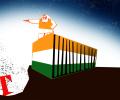
India is waiting for assurance from the US on comparative advantage over other economies under the deal.

These new tariffs were imposed by Trump on all countries, including India, on February 24 for 150 days following a Supreme Court verdict that struck down his earlier sweeping levies.

For India, the goal is not simply to host another grand diplomatic gathering. It is to prove that a diverse coalition of emerging powers can still deliver.

The ruling is expected to have wide-ranging consequences for global trade, businesses, consumers, inflation trends and household finances across the country.

Commerce Minister Piyush Goyal announced that the legal scrubbing of the India-EU Free Trade Agreement (FTA) text is expected to be completed within 10-12 days, with the final deal anticipated to be signed by December 31.

India has strongly refuted claims by the United States Trade Representative (USTR) regarding excess capacity in its steel and textile sectors, arguing that the nation's significantly low per capita consumption of these products contradicts such assertions, according to Amitabh Kumar, Additional Secretary in the Ministry of Commerce.

Responding to a question on the trade deal being negotiated between the two countries, Trump said India had taken advantage of US policies for years and charged tremendous tariffs.

The OECD projects India's GDP to grow at 7.6% in the current fiscal year and 6.1% in 2026-27, despite global economic challenges stemming from the Middle East conflict and energy price volatility.

'It is a blunt and dangerous attempt to pressure India to sign BTA on one-sided terms.'

US President Donald Trump is expected to sign the Lindsey O. Graham Sanctioning Russia and Iran Act of 2026 later on Friday (local time). A White House official confirmed the development to ANI without revealing further details.
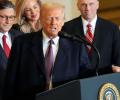
United States President Donald Trump has announced a 25 per cent tariff on imports from Canada and Mexico, as well as a 10 per cent tariff on goods from China, citing concerns over illegal immigration and the smuggling of drugs, including fentanyl.

A US trade representative described India as a 'tough nut to crack' during trade agreement negotiations in Washington, highlighting India's protection of its agricultural markets and the ongoing discussions on specific commodities.

Analysts predict continued volatility in Indian equity markets due to domestic macroeconomic data, F&O expiry, global developments including US tariff policies, and geopolitical tensions.
American industry groups sought punitive tariffs on Indian goods at USTR hearings, while Indian officials defended the country's manufacturing growth as demand-led and WTO-compliant.
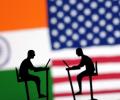
India and the US have reported positive progress in recent trade talks in Washington, agreeing to maintain engagement to finalise a bilateral trade agreement, which now requires recalibration following new US tariffs.

Japan is deepening its defence relationship with India while simultaneously expanding its economic, infrastructure and security engagement with countries around India -- particularly Bangladesh. The result is an emerging Japanese conception of South Asia in which India remains the strategic anchor, but the geography surrounding India is becoming increasingly important, points out Varun Arya.

Representatives Deborah Ross of North Carolina, Marc Veasey of Texas and Raja Krishnamoorthi of Illinois introduced the resolution on Friday in the House of Representatives to terminate Trump's national emergency authorising tariffs of up to 50 per cent on imports from India, helping to restore Congress' constitutional authority over trade.

US President Donald Trump will visit China from May 13 to 15 at the invitation of President Xi Jinping. The visit occurs amidst global tensions, including the war in West Asia and trade disputes between the US and China. Discussions are expected to cover China-US relations, world peace, and economic issues.

The verdict marks a notable shift from a series of recent wins for Trump at the Supreme Court.
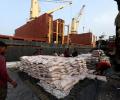
Indian exporters are unlikely to receive direct tariff refunds from the US's $166 billion payout, but the rollback of reciprocal duties is enhancing their pricing power and improving order prospects, particularly in textiles, apparel, and engineering goods.
Chief negotiators from India and the US are set to begin three-day talks in Washington to recalibrate the bilateral trade agreement (BTA) framework, following significant changes in the US tariff landscape, including a new 10 per cent tariff imposed on all countries.

A US federal court on Wednesday (local time) ruled against US President Donald Trump's large-scale imposition of sweeping tariffs, deeming that this move exceeds his legal authority and that it would affect a wide range of imported goods, as reported by CNN.

India and the US have decided to reschedule their meeting to finalize the interim trade pact due to recent developments and implications, including changes in US tariffs.
India and the United States are committed to finalising an interim trade agreement, despite recent challenges including the US imposing a blanket 10 per cent surcharge and India's decision to wait for a new global tariff architecture. The US Trade Representative's annual report highlights India's maintained high import tariffs and various non-tariff barriers across several sectors.
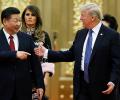
'We have incredible cards, but I don't want to play those cards.' 'If I play those cards, that would destroy China.'

In her address to the nation on the eve of the country's 80th Independence Day, the president stressed that just as government and society remain united to ensure national security, everyone must contribute through joint and concerted efforts to safeguard the present and future of students.
The official also advised all the trade partners to abide by the trade deals. The new 10 percent global tariff is part of Trump's protectionist trade agenda, aimed at addressing balance-of-payments issues and unfair trade practices.

'The contours of the trade deal need to be reworked now.'

The visit was expected to project Assam as the gateway to Southeast Asia and reinforce the state's emergence as a preferred investment destination.
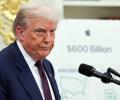
As one of the federal appeal courts in the United States ruled that most of tariffs imposed by Trump administration are not accordance with the laws, US President Donald Trump on Friday (local time) affirmed that all tariffs imposed on the countries will remain in effect, calling a recent ruling by a 'highly Partisan Appeals Court' incorrect.

For the foreseeable future, the most likely outcome remains continuation of the status quo. Taiwan will remain self-governing without formally declaring independence, while China continues to apply sustained pressure short of war, predict Krishnan Srinivasan and Manoj Mohanka.

'The BJP has all the instruments with them and they do have a sense of purpose, so I don't think there will be a challenge.'
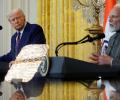
The Trump administration has told the US Supreme Court that it imposed tariffs against India for purchasing Russian energy products as part of its strategy to address the war in Ukraine.
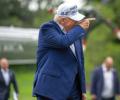
Trump has repeatedly claimed that he "helped settle" the tensions between India and Pakistan and that he told the nuclear-armed South Asian neighbours that America would do a "lot of trade" with them if they stopped the conflict.
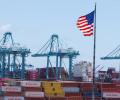
Indian exports to the US will face a 10% tariff, down from 25%, for 150 days following a US Supreme Court ruling. However, uncertainty persists due to potential further tariff hikes and long-term implications.

The BRICS foreign ministers' meeting in New Delhi concluded without a joint statement due to disagreements over the West Asia conflict, with Iran blaming the UAE for the lack of consensus. India, as the host, issued a chair's statement highlighting the differing views.

Guterres emphasised that global structures and institutions must reflect the complexity and the opportunity of the "new times and realities"
